Ever wondered how massive tech systems like Google or Amazon stay up and running flawlessly? It all starts with a solid system architecture. This isn’t just about code—it’s the blueprint that shapes how everything connects, scales, and survives real-world chaos.
What Is System Architecture? A Foundational Understanding

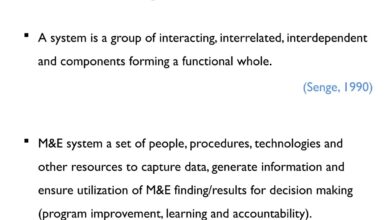
At its core, system architecture is the high-level structure of a software or computing system. It defines how different components interact, where data flows, and how services are organized to meet functional and non-functional requirements. Think of it as the architectural plan of a skyscraper—without it, you can’t build something stable, scalable, or secure.





The Definition and Scope of System Architecture
System architecture encompasses both hardware and software elements. It includes servers, databases, networks, APIs, microservices, and even user interfaces. According to the ISO/IEC/IEEE 42010 standard, architecture is the fundamental concepts or properties of a system in its environment, embodied in its elements, relationships, and principles of design and evolution.
- It defines the system’s components and their responsibilities.
- It outlines communication protocols between modules.
- It establishes constraints for development and deployment.
Why System Architecture Matters in Modern Tech
In today’s digital-first world, poor system architecture can lead to system failures, security breaches, and poor user experiences. A well-designed architecture ensures scalability, reliability, and maintainability. For example, when Netflix transitioned from monolithic to microservices architecture, it drastically improved uptime and deployment speed.
“Good architecture is not about technology—it’s about solving business problems effectively.” — Martin Fowler, Chief Scientist at ThoughtWorks
Key Components of System Architecture
Every robust system architecture consists of several interconnected components. Understanding these parts helps engineers and stakeholders make informed decisions during design and implementation phases.
Hardware and Infrastructure Elements
The physical or virtual foundation of any system includes servers, storage devices, networking equipment, and cloud platforms. Modern architectures often leverage Infrastructure as a Service (IaaS) providers like Amazon Web Services (AWS) or Google Cloud Platform (GCP).
- Compute resources: Virtual machines, containers, serverless functions.
- Storage: Block, object, and file storage systems.
- Networking: Load balancers, firewalls, CDNs, and DNS configurations.
Software and Application Layers
These include the operating systems, middleware, databases, and application code that run on top of the infrastructure. Common layers in a typical system architecture are:
- Presentation Layer: Handles user interface and client-side logic.
- Application Layer: Contains business logic and service orchestration.
- Data Layer: Manages data persistence and retrieval via databases or data lakes.
Communication Protocols and APIs
Components within a system must communicate efficiently. This is achieved through standardized protocols such as HTTP/HTTPS, gRPC, WebSocket, or message queues like RabbitMQ and Apache Kafka. RESTful APIs have become the de facto standard for web services due to their simplicity and statelessness.
“APIs are the glue that holds modern system architecture together.” — Kin Lane, API Strategist
Types of System Architecture: Monolithic vs. Microservices vs. Serverless
Choosing the right architectural style is critical. Each type has trade-offs in complexity, scalability, and team structure.
Monolithic Architecture: Simplicity with Limitations
In a monolithic architecture, all components of an application are tightly coupled and deployed as a single unit. This was the traditional model for software development.
- Pros: Easy to develop, test, and deploy initially.
- Cons: Hard to scale, difficult to maintain as the codebase grows.
- Use Case: Small applications with limited functionality.
For instance, early versions of eBay used a monolithic architecture before transitioning to a service-oriented model to handle increased traffic.
Microservices Architecture: Scalability and Flexibility
Microservices break down an application into small, independent services that communicate over defined APIs. Each service can be developed, deployed, and scaled independently.
- Pros: High scalability, fault isolation, technology diversity per service.
- Cons: Increased operational complexity, network latency, distributed data management.
- Use Case: Large-scale systems like Uber, Netflix, and Amazon.
Netflix, for example, runs thousands of microservices to manage everything from user recommendations to video streaming quality.
Serverless Architecture: The Future of On-Demand Computing
Serverless computing allows developers to run code without managing servers. Providers like AWS Lambda or Azure Functions automatically allocate resources and scale based on demand.
- Pros: No server management, automatic scaling, pay-per-use pricing.
- Cons: Cold starts, vendor lock-in, limited execution duration.
- Use Case: Event-driven tasks like image processing, chatbots, or cron jobs.
According to a Statista report, serverless adoption grew by over 40% between 2020 and 2023, indicating its rising popularity.
The Role of System Architecture in Scalability and Performance
One of the primary goals of system architecture is to ensure that a system can grow and perform under increasing load. Poor architecture can bottleneck performance regardless of hardware upgrades.
Horizontal vs. Vertical Scaling Strategies
Scaling is a key consideration in system architecture. There are two main approaches:
- Vertical Scaling (Scaling Up): Adding more power (CPU, RAM) to an existing machine. Simple but limited by hardware constraints.
- Horizontal Scaling (Scaling Out): Adding more machines to distribute the load. More complex but offers near-infinite scalability.
Modern cloud-native architectures favor horizontal scaling using container orchestration tools like Kubernetes.
Load Balancing and Caching Mechanisms
To distribute traffic evenly and reduce server load, load balancers sit between clients and servers. Tools like NGINX, HAProxy, or cloud-based solutions (e.g., AWS Elastic Load Balancer) route requests intelligently.
Caching further enhances performance by storing frequently accessed data in memory. Redis and Memcached are popular in-memory data stores used for caching database queries, session data, and API responses.
“Caching is the easiest performance win in system architecture.” — Greg Wilson, Software Engineering Expert
Database Optimization and Indexing
Databases often become performance bottlenecks. Proper indexing, query optimization, and choosing the right database type (SQL vs. NoSQL) are crucial.
- Indexing speeds up data retrieval but slows down writes.
- Partitioning (sharding) splits large databases into smaller, manageable pieces.
- Replication ensures high availability and read scalability.
For example, Twitter uses a hybrid approach with MySQL for user data and Cassandra for tweet storage to handle massive write loads.
System Architecture and Security: Building Resilient Systems
Security is not an afterthought—it must be embedded into the system architecture from the start. A breach in one component can compromise the entire system.
Principles of Secure System Design
Secure architecture follows established principles such as:
- Least Privilege: Users and services should have only the permissions they need.
- Defense in Depth: Multiple layers of security controls (firewalls, encryption, intrusion detection).
- Zero Trust: Never trust, always verify—every request must be authenticated and authorized.
The NIST Cybersecurity Framework provides guidelines for designing secure systems.
Authentication, Authorization, and Encryption
These are the pillars of system security:
- Authentication: Verifying identity (e.g., OAuth, JWT, MFA).
- Authorization: Determining what an authenticated user can do (e.g., RBAC, ABAC).
- Encryption: Protecting data at rest and in transit using TLS, AES, etc.
For example, banking systems use end-to-end encryption and multi-factor authentication to protect sensitive transactions.
Threat Modeling and Risk Assessment
Before building a system, architects perform threat modeling to identify potential vulnerabilities. Techniques like STRIDE (Spoofing, Tampering, Repudiation, Information Disclosure, Denial of Service, Elevation of Privilege) help categorize threats.
Microsoft’s Threat Modeling Tool is widely used to visualize and mitigate risks in system architecture.
Design Patterns in System Architecture
Design patterns are reusable solutions to common problems in software design. They provide proven templates that improve reliability and maintainability.
Layered Architecture Pattern
This is one of the most common patterns, organizing the system into layers such as presentation, business logic, and data access. Each layer interacts only with the one below it, promoting separation of concerns.
- Used in enterprise applications and web platforms.
- Easy to understand and maintain for small to medium systems.
- Can become rigid if layers are too tightly coupled.
Event-Driven Architecture
In this pattern, components communicate through events. When something happens (e.g., a user signs up), an event is published, and other services react accordingly.
- Highly decoupled and scalable.
- Uses message brokers like Kafka, RabbitMQ, or AWS SNS/SQS.
- Ideal for real-time systems like stock trading or IoT platforms.
Uber uses event-driven architecture to process ride requests, driver availability, and payment confirmations in real time.
Service Mesh and API Gateway Patterns
As microservices grow in number, managing communication becomes complex. A service mesh (e.g., Istio, Linkerd) handles service-to-service communication, including load balancing, encryption, and observability.
An API gateway acts as a single entry point for all clients, handling routing, authentication, rate limiting, and monitoring.
- Reduces boilerplate code across services.
- Improves security and observability.
- Increases infrastructure overhead.
Best Practices for Designing Effective System Architecture
Creating a successful system architecture requires more than just technical knowledge—it demands foresight, collaboration, and continuous improvement.
Start with Requirements and Constraints
Before writing a single line of code, define the functional and non-functional requirements:
- What should the system do? (Functional)
- How fast should it respond? (Performance)
- How many users will it support? (Scalability)
- What happens during failures? (Reliability)
Use tools like user stories, use case diagrams, and SLA definitions to capture these needs.
Embrace Modularity and Loose Coupling
Modular systems are easier to test, deploy, and scale. Loose coupling ensures that changes in one module don’t break others. This is especially important in microservices and distributed systems.
“The best systems are built from small, independent pieces that work together seamlessly.” — Robert C. Martin, Author of Clean Architecture
Document and Iterate Continuously
Architecture documentation is often neglected but is critical for onboarding teams and maintaining consistency. Use tools like C4 model or UML diagrams to visualize the system.
Architecture should evolve. Regularly review and refactor based on feedback, usage patterns, and technological advances.
Real-World Examples of System Architecture in Action
Learning from real-world implementations provides invaluable insights into how system architecture solves complex problems.
Netflix: Microservices at Scale
Netflix transitioned from a monolithic data center setup to a cloud-based microservices architecture on AWS. Today, it runs over 700 microservices, each responsible for a specific function like user authentication, video encoding, or recommendation engines.
- Uses Chaos Monkey to test resilience by randomly shutting down services.
- Leverages Zuul as an API gateway and Eureka for service discovery.
- Employs Hystrix for circuit breaking to prevent cascading failures.
Source: Netflix Tech Blog
Amazon: From Monolith to SOA and Beyond
In the early 2000s, Amazon’s entire platform was a single monolithic application. As traffic grew, it became unsustainable. The company re-architected into a Service-Oriented Architecture (SOA), which later evolved into microservices.
- Each team owns a service and exposes it via APIs.
- Internal mandate: “You build it, you run it.”
- Led to the creation of AWS, now a leader in cloud computing.
This shift enabled Amazon to deploy code thousands of times per day.
Spotify: Squad Model and Backend Architecture
Spotify combines technical and organizational architecture. It uses a “squad” model where autonomous teams develop and deploy features independently.
- Backends are built using a mix of Python, Java, and Node.js.
- Uses Cassandra for large-scale data storage and Kubernetes for orchestration.
- Employs event-driven architecture for playlist updates and user activity tracking.
This flexibility allows rapid innovation while maintaining system stability.
Future Trends in System Architecture
As technology evolves, so does system architecture. Emerging trends are shaping how we design systems for the next decade.
Edge Computing and Decentralized Architectures
Instead of sending all data to centralized cloud servers, edge computing processes data closer to the source—like IoT devices or 5G base stations.
- Reduces latency and bandwidth usage.
- Improves real-time decision-making (e.g., autonomous vehicles).
- Challenges include security and device management.
Companies like AWS (with AWS Greengrass) and Microsoft (Azure IoT Edge) are investing heavily in edge solutions.
AI-Driven Architecture Design
Artificial intelligence is beginning to assist in architectural decision-making. AI tools can analyze codebases, predict performance bottlenecks, and suggest optimal configurations.
- Google’s Vertex AI can optimize ML model deployment architectures.
- Startups are developing AI-powered APM (Application Performance Monitoring) tools.
- Future systems may self-heal and auto-scale based on AI predictions.
Quantum Computing and Its Architectural Implications
While still in infancy, quantum computing promises to revolutionize cryptography, optimization, and simulation. Future system architectures may need hybrid classical-quantum designs.
- Quantum-resistant encryption will be essential.
- New programming models (e.g., Q#) and hardware interfaces will emerge.
- IBM and Google are leading research in quantum-ready architectures.
What is system architecture?
System architecture is the structural design of a system, defining how its components interact, communicate, and fulfill technical and business requirements. It includes hardware, software, data, and network elements organized into a coherent framework.
Why is system architecture important?
It ensures that a system is scalable, reliable, secure, and maintainable. A well-designed architecture reduces technical debt, supports rapid development, and enables smooth integration with other systems.
What are the main types of system architecture?
The main types are monolithic, microservices, and serverless. Monolithic is a single-tiered structure; microservices break the system into independent services; serverless runs code in response to events without managing servers.
How do you choose the right system architecture?
Consider factors like team size, scalability needs, performance requirements, and deployment frequency. Startups might prefer monolithic for speed, while large enterprises often adopt microservices for flexibility.
What tools are used in system architecture design?
Common tools include UML for modeling, Kubernetes for orchestration, Docker for containerization, Terraform for infrastructure as code, and monitoring tools like Prometheus and Grafana.
System architecture is the backbone of every successful software system. From defining components and communication patterns to ensuring security and scalability, it shapes how technology serves business goals. Whether you’re building a simple app or a global platform, investing time in thoughtful architecture pays dividends in performance, reliability, and long-term maintainability. As technology evolves—with trends like AI, edge computing, and quantum systems—the principles of good architecture remain constant: clarity, modularity, and resilience.
Further Reading: